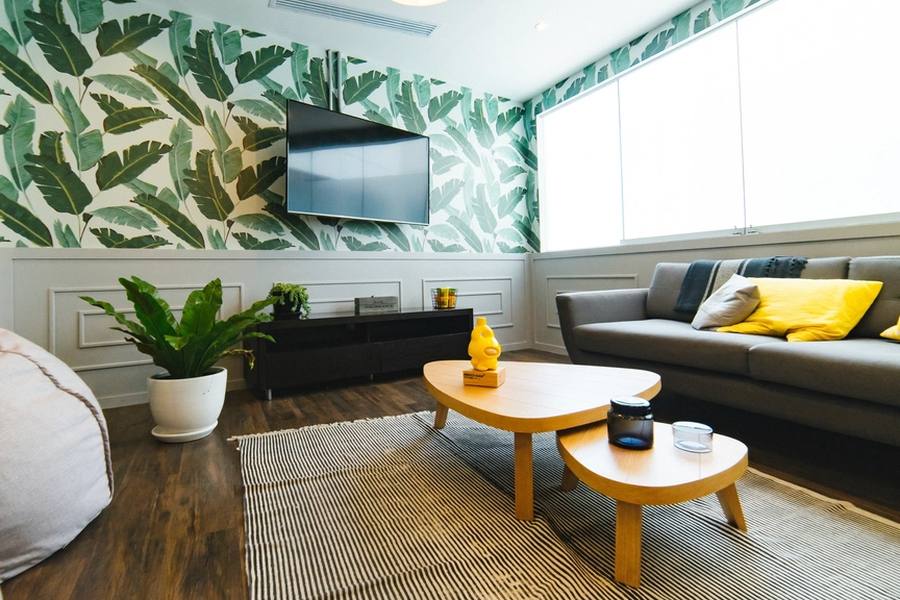
Symbolbild (Stockfoto); nicht das abgebildete Produkt.
Texture At Low Cost
Jute gives a natural textural surface at considerably lower cost than wool, which is why it appears in so many rooms as a base layer.
The neutral colour works with almost anything, and layering a smaller patterned rug over a large jute one is a common and effective arrangement.
It also has genuine visual weight despite being low pile, which makes a room feel grounded in a way a thin synthetic rug does not.
Water Is The Problem
Jute absorbs water readily, takes a long time to dry and can develop mould and a persistent smell, and it also stains and browns where wet.
That rules out bathrooms, kitchens with spill risk, and anywhere with a leaking radiator or a damp floor, which is more rooms than people expect.
Spot cleaning with water is also problematic, since it frequently leaves a water mark worse than the original stain.
Coarse Underfoot
Jute is rough compared to wool, and it is not a rug for bare feet in a bedroom or for children playing on the floor.
It suits circulation areas, under furniture, and rooms where a rug is walked across rather than sat on.
Layering a soft wool or cotton rug over a large jute one gives the grounding of the jute with somewhere comfortable to sit or stand.
Softer natural alternatives such as wool-jute blends exist and cost more while being considerably more pleasant underfoot.
Shedding And Vacuuming
Jute sheds fibres continuously rather than settling down the way wool does, which means a persistent fine debris under and around the rug.
Vacuuming regularly manages it, and a beater bar pulls at the weave and accelerates the problem.
A rug pad underneath catches a good proportion of what sheds through, which keeps it off the floor and makes the debris easier to deal with in one go.
That shedding never entirely stops, which is worth knowing before putting one in a room where it will be noticed.
Durability And Furniture
Jute wears reasonably under foot traffic and compresses permanently under heavy furniture legs, leaving marks that do not recover.
Furniture cups spread the load and prevent the worst of it, and moving furniture slightly every so often lets the fibre recover.
Binding style also affects appearance, with a cotton or linen tape border reading as more finished than a raw serged edge and lasting considerably longer before it frays.
The weave can also unravel at a cut edge if the binding fails, which is why binding quality matters more on jute than on a woven wool rug.
Sisal and seagrass are the close relatives worth knowing about, with sisal being harder wearing and even coarser, and seagrass being smoother and almost impervious to water compared to jute. Seagrass in particular handles damp considerably better and has a slightly greenish tone that fades to beige over time, which means it changes appearance across its life in a way jute does not.
The Verdict
A cheap way to add natural texture and ground a room, entirely unsuited to anywhere that might get wet.
It is coarse underfoot, sheds continuously, marks permanently under furniture and stains where cleaned with water.
Keep it away from anywhere wet. Jute absorbs water, dries slowly, develops mould, and stains where you try to clean it.
Auf einen Blick
Vorteile
- Natural texture at low cost
- Neutral colour works with almost anything
- Good base layer for layering a patterned rug over
- Grounds a room visually despite low pile
Nachteile
- Absorbs water, stains and can develop mould
- Coarse and unpleasant for bare feet or children
- Sheds fibres continuously
- Compresses permanently under furniture legs
Häufig gestellte Fragen
Can I use it in a kitchen or bathroom?
No. Jute absorbs water readily, dries slowly, can develop mould and a persistent smell, and browns where wet. Even spot cleaning with water frequently leaves a mark worse than the original stain.
Is it comfortable underfoot?
No, it is coarse compared to wool and unsuitable for bare feet in a bedroom or for children playing on the floor. It suits circulation areas and spaces walked across rather than sat on. Wool-jute blends are considerably softer.
Does the shedding stop?
Not entirely. Jute sheds continuously rather than settling down the way wool does, producing fine debris under and around the rug. Regular vacuuming without a beater bar manages it, and it never fully ceases.
Spezifikationen
| Material | Jute plant fibre |
| Cost | Considerably below wool |
| Water | Absorbs readily; stains and moulds |
| Unsuitable rooms | Bathrooms, kitchens, damp areas |
| Texture | Coarse; poor for bare feet |
| Shedding | Continuous; never fully stops |
| Furniture | Use cups to spread load |
| Alternative | Wool-jute blend, softer |
Fazit
Cheap natural texture that grounds a room, and keep it away from water entirely. Coarse underfoot and it sheds forever.
Preis auf Amazon prüfen